
After Uganda: The Weight Of Caring for the world
Going to Africa always makes me feel like I've been tangled up into a ball and I need to untangle myself.
Actually, I got the idea several months ago to write a new travel essay with Tim, where we both talk about what Africa means to us. But it requires such deep excavation, and I don't have the mental, emotional, or spiritual bandwidth for that in this season of my life.
Coming home after our trip to Uganda to commission a clean water system for an orphanage, I feel much the same way I did after my previous two trips to Kenya.
I feel exhausted.
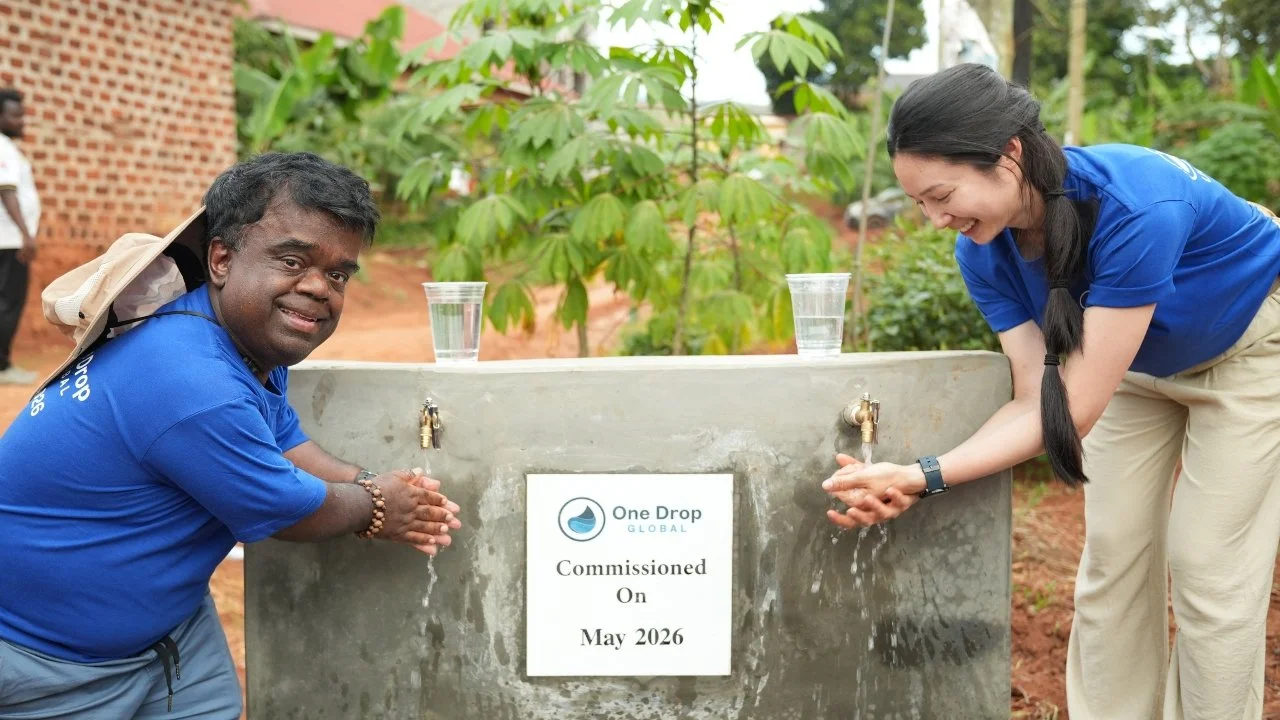
I work so hard on these trips and hardly get a moment to myself. We're up early, packing our bags and heading to the project site. We're there all day, usually until 4:30 or 5:00 p.m. Then—and this is the difference that Tim never really knew—I feel the pressure to transfer footage onto hard drives for backup, post on social media, charge camera batteries, review what I filmed that day, or somehow do all of the above. In the evening.
This time, I gave myself the added pressure of overseeing a videographer and editor who were helping produce our MISSION: WATER docuseries.
All of this while personally witnessing the lives of the children and adults in the community.
Parts of the trip were incredibly special, but despite all the good, I usually left Africa with a heaviness in my heart.
The thing that saddens me most is not something that safari company and tourism boards want you to think about.
Why are these people still living in poverty?
Why are so many homes so basic?
Why are some of the roads still dirt?
Why are there people living without access to clean water just one hour from an international airport where there are shopping malls with glistening tile floors and air conditioning?
Why does this feel like the same scene I watched as a child in World Vision commercials?
Why hasn't the world gotten better for these people?
When I'm in Uganda, staying busy most of the day, I don't have time to think about these things.
Or maybe I try not to.
But one moment really hit me. Towards the end of the project, we were chatting casually with one of the Ugandan team members.
We had hoped our editor would have a cut of a new episode ready that morning, but we hadn't heard from him.
Then we found out there had been no power overnight.
We found out, electricity used to be reliable. It would only go out four or six times a year.
Now it was going out every day.
Every day.
He told us it used to be managed by a private company, but now the government had taken it over. In that transition, this is what life had become.
Daily blackouts.
After everything that Tim and I put ourselves through to help a few thousand people gain access to clean water, it struck me that decisions made by people in power could make millions of lives worse.
What difference are we making?
It broke my heart to think that no matter what we do, maybe it doesn't really make a difference.
It could all be undone in moments.
And if the government really wanted to, they could fix it.
This isn't my responsibility.
I remember saying to Tim quietly afterwards, back in our room, "Why bother?"
Why not just buy lavish bedsheets and fancy coffee machines and $9 lattes?
Why put ourselves through all of this if the government and systems meant to care for people seem so broken?
In North America, water access is largely handled by governments and municipalities. There aren't little NGOs from Africa coming to help us drill wells.
I know the full magnitude of this wealth disparity has been shaped by decades of colonialism.
The social science behind how to help Africa—or any developing country—is beyond the scope of what I can capture in this little blog.
But if anyone out there has something to say about this, I'm listening.
Why don't we all just stay within our own borders, forget about the needy, the suffering, and the vulnerable, and spend our money, time, and energy only on ourselves?
Why not join the crowds of people buying new, nice clothes instead of sacrificing my life?
I want to have hope.
I want to say that it's worth it.
But today, I don't know.
I know how much emotional, mental, and spiritual energy it costs me to work on these water projects with Tim. While he has been able to keep doing this for twenty years, I don't know if I have it in me.
Perhaps my creative sensitivities—the same ones that allow me to photograph, film, and write—are also the reason I cannot ignore my inner world.
So what do I look to now?
I still have a few thousand photos from Uganda waiting to be edited. I hope to get to them when I'm feeling more hopeful and positive about the world.
I look to the 42 people who gave to our fundraiser for One Drop Global. Some of those people gave $100. Some gave $500. Some gave $5. Each person took the time to fill our the form to give.
That's something.
We also received so many encouraging comments on our YouTube videos.
On a good day, all of that points to hope.
On a bad day, it cannot mend my heart.
So now what?
Thankfully, it is summer back at home, and the days are warm and long.
That is some respite from the devastation and sadness I feel in my soul about Africa.
Hopefully, as I rest a little at home, my soul will find a steadier footing. A better perspective about it all.
For now, I’m waiting, and hoping.